Friday, July 24, 2020

Trenton Psychiatric Hospital (Trenton, NJ) -- Stephanie Cushman


When was this "asylum" opened, and what did it look like? Did it follow Kirkbride's design? 

~ The doors opened on the May 15th, 1849 and its capacity was around 90 patients. This institution was the first public institution to employ the Kirkbride Plan, which promoted patient privacy and a welcoming, naturally lit environment.

~ The hospital opened originally as the New Jersey State Hospital at Trenton in 1848. Later known as the New Jersey State Lunatic Asylum and then Trenton Psychiatric Hospital (TPH), which is what it’s known as today.  


What was this institution's original intent?

~ This asylum was founded by Dorothea Dix, it was quite the effort that took years. She decided to put interest in this asylum due to certain cases. This asylum was intended to take a portion of residents from each of New Jersey counties. Trenton Psychiatric Hospital was self-sufficient with its own kitchens, gardens, laundries, livestock, and much more. There was more buildings added in within the years to house more patients. There was a main house that provided these necessities and separate dorms/wards for males and females. The additional buildings were added in 1855 that increased the capacity of patients by another 250 patients and caregivers. These added in buildings also served other purposed than to house patients, they served scientific purposes as well. There was a laboratory built and more to help the functioning of the asylum. There was different facilities dedicated to those who were deemed incurable as well as more wealthier patients as well. Dorothea Dix intent for this asylum was to humanely house and care for people whose mental illness made it impossible to be cared for safely in a non-institutionalized setting. 


 ~ When the asylum first opened, it was under superintendent Dr. Buttolph, where the asylum housed 86 patients. Under his supervision, the buildings were improved and enlarged from time to time new ones were erected to meet certain requirements. There was new buildings that accommodated the Randolph museum and reading room in 1855. There was new building for laundry supplied in 1858, alongside with several billiard tables for both men patients and women patients. The superintendent at this time believed that healthful exercise to the body and limbs would help significantly with concentrating the attention of the mental facilitates of many spectators as well as those directly engaging in it. In 1866, two new wing s were added to the building, one for women and one for men. These additions had more lighting, heating, drainage, plumbing, and furnishing. Dr. Ward replaced Dr. Buttolph and served for 40 years, leaving a rich legacy. There was a division due to a new institution opening where 292 patients (139 men and 153 women) were removed from care at Trenton and moved to the new institution. On October 31, 1876 there remained 251 men and 221 women for a total of 472 inmates. 

~Dr. Ward was succeeded by Dr. Henry Cotton who was convinced that mental illness was caused by infection and began the practices of removing patients limbs, teeth, tonsils, and other body parts (e.g., organs) in hopes to remove infection or to prevent its spread. Dr. Cotton was  a mad doctor who caused a extremely high number of fatalities of patients. Despite these high numbers, no one stopped him. He was essentially a murderer and was maiming patients. Dr. Cotton even did this against the will of the patients and didn’t get permission from family members of the patients. Even after Dr. Cotton left the asylum the practices of removing teeth continued for 30 years, until the 1960s which continued his legacy of suffering. TPH now believes in a holistic approach to patient care. Working together with the direct staff to ensure the patient and the patient’s family competent, compassionate care ago achieve individualized patent care goals. 


How many people lived, worked, and died there? 

 ~ There has been a lot of patients to come and go throughout the existent of Trenton Psychiatric Hospital (TPH). It is hard to collect the amount of people who lived, worked a, and died there because it is still running to date. 

~ On October 31 1912 the hospital had a total of 1451 patients — 742 men and 709 women. During that year 488 patients were admitted (282 men and 206 worn). There was two men who escaped but returned, and 11 patients nominally admit for discharge a the end of their four months visit— the number of admissions would be 501, making the total number under care 1,952. 

~ Exactly a year later there was 1547 patients (781 men and 766 women) 

~ A year later there was 1539 patients (787 men and 752 women) 

~ In 1954 there were 4,237 patients hospitalized at TPH 

~ In 1968 there were under 2,8000 patients 

~ Today the hospital has a capacity of 376 beds 

~ Under Dr. Cotton’s management hundreds (to be known) patients died from post-surgical infections due to antibiotics not being in use. After his death in 1933, a review found his medical procedures killed 45% of his patients 


Were bad conditions ever exposed to the public? How?

~ Dr. Cotton made it known what he was doing at the hospital, referring to himself to be a pioneer in treating mental illness. He published many papers on his work. The public is well aware of the practices that were done under the management of Dr. Cotton. All of my resources acknowledge and state the horrors of this. 

~ There has been evidence of ghostly activities but many paranormal researchers. There has been sighted: Doctor Cotton’s apparition (by sight), ghost of patients with missing limbs, disembodied voices, and orbs. 

~ There was also questions leading to concerns great enough to send investigators to the asylum. There was coverups being done which continue even to date. The real truth about what happened after Dr. Cotton left could still be covered up. 


Would you have wanted “treatment” in this institution?

~ No, I would not want to receive treatment in this institution. The way Dr. Cotton went about treatments was barbaric and costed patients their lives. The institution has evolved a lot over the years and they now take a holistic approach that focuses on the individual and provides compassionate care. If I was to need treatment now, I would consider the new TPH, not old. 


References 

https://www.state.nj.us/humanservices/involved/nurses/mentalhph/tph.html

https://www.ghostlyactivities.com/trenton-psychiatric-hospital-hauntings/

https://the-line-up.com/trenton-psychiatric-hospital

https://www.worldabandoned.com/trenton-psychiatric-hospital

https://asylumprojects.org/index.php/Trenton_State_Hospital


New Hampshire Asylum for the Insane: Concord,NH - Morgan Wallingford


When was this "asylum" opened, and what did it look like? Did it follow Kirkbride's design? 


This was opened in 1842 and it looked like all the other facilities that were around at the same. The appeal of a prison-like atmosphere. It was hard to find past information. Some of the biggest repeat news on it was so how well built it was. It looks almost identical to Pineland in Gray, ME with the brick, schools like the look and the farm surrounding. The similarity in Kirkbride’s design was the U-shaped formation of the building itself. 


What was this institution's original intent?

From what I read, originally it was meant to house the homeless and acknowledge mental illness in the United States. This was the 17th asylum to open here in the US. 


Who were the patients there? Do narratives of their experiences exist?

Men and women were housed there separately. I couldn’t find narratives about patients' experiences. All were considered to be mentally ill. Something worth noting here is how the census separates the population in the adding of people by gender, nationality, race they are, then age group, even marital status, whether they are literate, occupation, years spent in insane hospitals, number of admissions to hospitals, duration of attack symptoms, and discharge status/deaths/transfers. There is a place for if they were ‘White’ and breaking down to native, foreign-born, and nativity unknown. The end of the list accounts for the ‘Colored’ that only breaks down totals for that group. Truly details out the time of what segregation looked like within the medical world classification.


What was the patients' experience like in that institution, and did that change over the course of the institution's history?


After some years with adding on some buildings, they did this to make it feel more ‘home-like’. The name was changed in the early 1900s to New Hampshire State Hospital. They became the top known in the state for the insane. From reports of staff, they followed all the institution like behaviors for managing patients. 

Did the institution, its services, and patients change over time?


Reports of in the beginning that the difficult patients were housed within the basement. The lack of staffing for a large number of patients where it was rumored for 1 to every 50. Minimal daylight for the rooms they were kept in. Followed medical practices at the same for managing patients without medications. Reports of being cold with the lack of heat there. Appears to have gotten better over time with their expansion into a large hospital. After the institution closed, there is a portion of the new layout for psychiatric care where it is one of the largest parts of the hospital to this day.


How many people lived, worked, and died there? 

Roughly 2,000 people lived there over the years before changing the name and adding more buildings. After that, it was the top asylum in the state. 


The one-piece of real hard data I found was of a census done in the year 1910 with 876 people total and 145 died. At that time in the day, the patients without families were buried nearby. That cemetery was renamed but is apparently still there!


Were bad conditions ever exposed to the public? How?

Honestly, it was hard to find information on this place that made it feel like there was a lot that went on that remains kept a secret. There were a few things from former staff and a former college student. Interestingly, I watched a video that’s posted below that in the same county that Stafford County Asylum burned down to the ground in a fire with the majority of all its patients inside, all staff got out and only 3 patients. This was reported at the start of the movement to close small asylum’s in counties and only house in the state one that expanded the buildings. 


Even though the information here for this location is scarce, I believe this brings up a unique unheard side of institutional history. For the number of things that were not reported, not taken seriously, and following societal views. There was a book from 1898 specifically on it but no online copy of it to review. Interestingly enough as well, many sources report that it is haunted from those days for why once rebuilding happened that they just abandoned the building. It is still there for many years just sitting there with no alternative use. 


Would you have wanted "treatment" in this institution?

The overall impression I get on these institutions is that people should be thankful to be there because they weren’t wanted anywhere else. I would never want to live like that! Institution treatments during that time were utterly disturbing and having experiences like that would make life a whole lot harder today. I am a complete believer that negative environments, experiences, and treatment create trauma for a person. Those are events you never forget no matter how hard you try and they shape who you are and your impressions. I would be heartbroken if I had to view the medical system like that where I did not have any trust in it. To be more afraid inside than outside is terrifying and I would not wish it on anyone. 


References:

https://www.ncbi.nlm.nih.gov/pmc/articles/PMC5086946/?page=9 (go to pg. 281)


https://www.asylumprojects.org/index.php/Concord_State_Hospital


https://1037thepeak.com/this-will-give-you-chills-up-your-spine-tour-this-1842-insane-asylum-in-concord-nh-watch/


https://www.dhhs.nh.gov/dcbcs/nhh/history.htm


https://www.youtube.com/watch?v=G5nwcFz58_I


https://www.concordmonitor.com/Archive/2013/03/stimmell-cmview-031413


https://www.youtube.com/watch?v=9KmzDAx08RQ


https://www2.census.gov/prod2/decennial/documents/03322287no111-121ch6.pdf

(go to pg. 14)

Insane Asylum of Phoenix – Arizona – Kailyn Hill


Insane Asylum of Phoenix – Arizona

The construction of the Insane Asylum of Phoenix began in 1886. This massive building was large enough to take in 280 patients and took eight months to complete. The facility was officially opened in 1887.  This building consisted of “three buildings with 2 patient wings and a central administrative facility”, the building followed the Kirkbride design in this way (Asylum Projects). The facility also followed Kirkbride’s design as it was set on 160 acres of land allowing for patients to involve themselves in the gardens and farming.


The Insane Asylum of Phoenix was initially built in recognition that “mental illness is a state responsibility” (Asylum Projects). A board of control, replacing the insane asylum board, was established to create more strict guidelines to be followed regarding “declarations of insanity, patient confinement, and terms of release” (Asylum Projects). Individuals were committed for a range of reasons, due to a lack of institutions in the area. These reasons were occurrences such as, “old age, tuberculosis, and ‘feeblemindedness’” (Asylum Projects). Upon research, there is no personal accounts of the experiences had by patients of the hospital.

Starting with the name Insane Asylum of Phoenix, in 1902 the name was changed to “Territorial Asylum for the Insane” and then changed again in 1924 to “Arizona State Hospital” (Asylum Projects). Just as the name changed over time, so did the number of patients admit to the hospital. The asylum started at 61 patients at the opening in 1887 and by the early 1950’s there was close to 1,800 patients in the hospital (Asylum Projects). As there was a better understanding of human rights and mental illness, the hospital grew with these changes. There was stricter requirement in receiving an “insane” diagnosis and well as a restriction that “made it impossible to get in and easy to be released” (Asylum Projects). In 1973, the current governor and the legislature developed the Arizona Department of Health Services to oversee the mental health services for this facility.

Although it is not clear how many staff members worked in this facility or how many patients walked the halls, part of the 160 acres dedicated to this facility was a graveyard dedicated to staff and patients. Currently, there are 2400 graves dating back to 1888 (Asylum Projects). The records that are available for this facility outline a higher patient to staff ratio, and also touches on understaffing which is a common theme to the mental health world that we all know.

There are very little records of the specific conditions of the asylum, so to the best of my knowledge bad conditions were never exposed to the public. As this asylum seems to follow Kirkbride’s design, I would feel comfortable being treated in this facility. From the available information it seems as though individuals were treated fairly and like human beings in this facility.


http://asylumprojects.org/index.php/Arizona_State_Hospital

** I could not seem to get the "create post" option pop up for my maine account, so this will just have to do until I figure out why it is doing this.

Thursday, July 23, 2020

Taunton Hosptial of Massachuetts - Emily Gobi

Let's talk about...Taunton State Hospital in the early 20th century. 

When was this "asylum" opened, and what did it look like? Did it follow Kirkbride's design?  
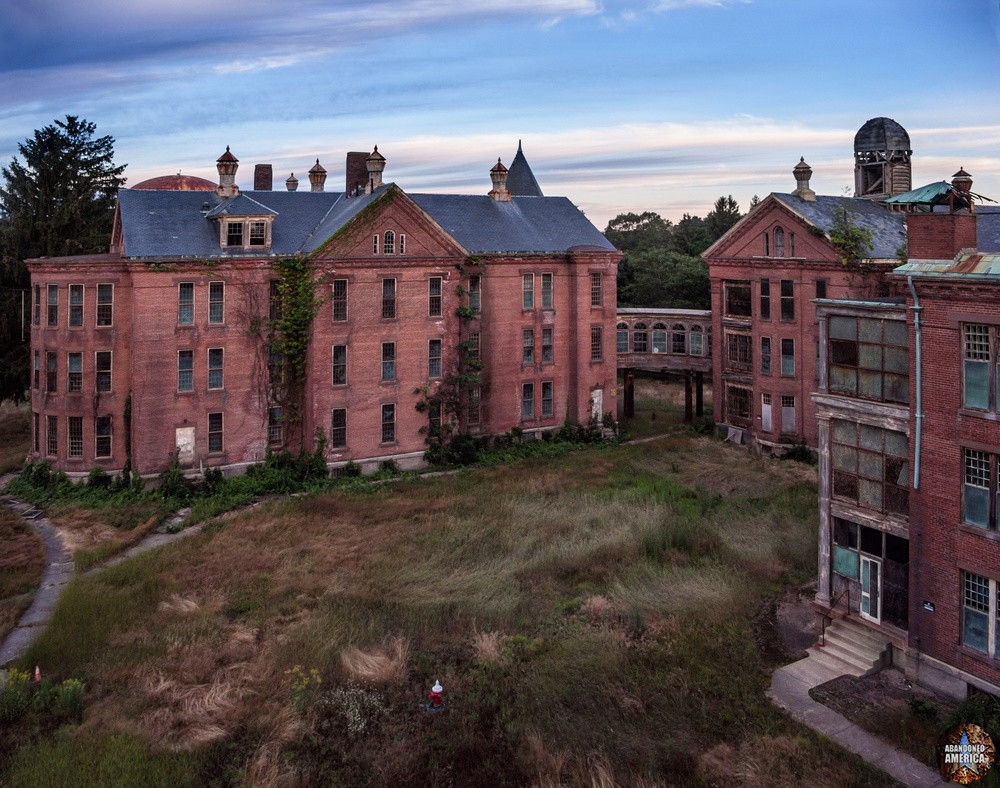
This hospital opened in 1854 under the name "State Lunatic Hospital at Taunton". The original building - which did follow Kirkbride's design - was erected on a 154-acre farm alongside the Mill River in town. Over the years, the complex was further developed to eventually consist of forty different buildings across the acreage. 

From asylumprojects.org: "The building boasted all of the modern conveniences: central heat, running water, sewer and central ventilation. It contained a chapel, kitchen, bakery, laundry, dining rooms, apartments for staff, washrooms, parlors, open-air verandas and "patient" rooms. Some patient rooms were dormitory style and others private. Private rooms were an innovation and reflected the institution's concern for its inhabitants who would now be called "patients" and not "inmates." (https://www.asylumprojects.org/index.php/Taunton_State_Hospital)

(You can find more pictures from 2008, of the hospital in disrepair, here: https://www.abandonedamerica.us/taunton-state-hospital)
 Abandoned Taunton State Hospital

What was this institution's original intent?
Taunton Hospital was commissioned in 1851 by the Massachusetts General Court to help relieve the overcrowding at Worcester Hospital, which at the time was the only mental health hospital in the state. Because it was a Kirkbride building, it also aimed to provide the most current services to individuals suffering from mental illness. 

Who were the patients there? Do narratives of their experiences exist?
One of the most famous patients of Taunton Hospital was Lizzie Borden, who claimed she was held in the asylum after being accused of murdering her parents in Fall River in 1892; records show she was only held in the complex's jail. In 1902, a nurse by the name of Jane Toppan (sometimes known as 'Jolly Jane'; here's a fascinating article on her life: https://www.newenglandhistoricalsociety.com/jolly-jane-toppan-killer-nurse-obsessed-death/) was convicted of killing 31 one people. She was found not guilty by reason of insanity, and was subsequently committed to Taunton for the rest of her life, dying in 1938. I was unable to accounts of her specific time in the hospital, and there were no accounts on other patients either.


jane-toppan
Jane Toppan


What was the patients' experience like in that institution, and did that change over the course of the institution's history?
Taunton was said to be different in many ways from other institutions at the time, encouraging patients to go outside, get fresh air, and engage in "occupational therapy" tasks such as working on the complex's farm (http://spookysouthcoast.com/a-look-at-the-taunton-state-hospital/). Still, the hospital was a product of the times and still used things such as water therapy - dunking patients into freezing water and then exposing them to extreme cold to help them "snap out of" their ailments. In addition, electroshock therapy was quite popular and used for a variety of diagnoses. (https://www.tauntongazette.com/article/20120129/NEWS/301299942). 
As science discovered more about mental illness, the treatments changed to reflect what was believed to be most effective to heal patients. Still, most people, once committed, spent the remainder of their lives in hospital. 
There are rumors and unverified documentation that states unwilling patients were often brought into the basement by nurses and doctors to engage in Satanic rituals. This is the basis to the theory that Taunton was one of the most haunted institutions in the country (http://www.the13thfloor.tv/2016/12/20/america-most-haunted-asylum-taunton-hospital-of-massachusetts/). There is even documentation stating that Satan himself once showed up (http://www.hauntedtravelsusa.com/me/haunted-travels-usa/taunton-state-hospital-9013.html). Make of that what you will! 


Did the institution, its services, and patients change over time?
Beginning in the 1930s, Taunton added  juvenile facilities, crisis centers, sick wards, and group homes to the complex, thereby expanding the type of patients they would accept - and the type of treatments they would offer. https://en.wikipedia.org/wiki/Taunton_State_Hospital). 

How many people lived, worked, and died there?
Within two months of opening, Taunton received 250 patients. By 1873, there were 500 patients housed at the complex. There are no reports of suspicious deaths within the hospital, but many people died of "natural causes" after spending their lives in the asylum. In 2012, shortly before final closing, there were 169 patients in the facility. (https://www.telegram.com/article/20120124/NEWS/120129750). I was unable to find information about numbers of staff.

Were bad conditions ever exposed to the public? How? 
The 'bad" conditions at Taunton were the same treatments being used in other hospitals, and there are reports of exposes. However, the main buildings were shut down in 1978 following rumors of abuse and neglect (http://spookysouthcoast.com/a-look-at-the-taunton-state-hospital/). I was able to find vague descriptions like, "the people who ran the place were more terrifying than the patients" but no stories or details. Strange. 

Would you have wanted "treatment" in this institution? Overall, this institution seemed to be aimed at true healing and recovery, even if they didn't always go about this in the best way. Being in an institution in the late 1800s/early 1900s seems like it was terrible everywhere, so no - I would not have wanted to be a patient, especially given reports that once admitted, most people were never released. 

Sources:
https://www.newbedfordguide.com/the-lunatics-mentally-ill-and-ghosts-of-the-state-lunatic-hospital-in-taunton/2018/10/30?print=print
https://www.tauntongazette.com/article/20120129/NEWS/301299942
http://www.the13thfloor.tv/2016/12/20/america-most-haunted-asylum-taunton-hospital-of-massachusetts/
http://spookysouthcoast.com/a-look-at-the-taunton-state-hospital/
http://www.hauntedtravelsusa.com/me/haunted-travels-usa/taunton-state-hospital-9013.html
https://en.wikipedia.org/wiki/Taunton_State_Hospital
https://www.newenglandhistoricalsociety.com/jolly-jane-toppan-killer-nurse-obsessed-death/
https://www.telegram.com/article/20120124/NEWS/120129750

Wednesday, July 22, 2020

Trans Allegheny Lunatic Asylum, Weston West Virginia (Lauren)


Trans Allegheny Lunatic Asylum, Weston West Virginia (Lauren)


When was this "asylum" opened, and what did it look like? Did it follow Kirkbride's design?  Paste images as appropriate - interior and exterior. 
The Trans Allegheny Lunatic Asylum, in Weston, West Virginia, is the largest building of hand cut masonry in the North America constructed between 1858 to 1881. It was open for patients from 1864-1994. It followed the Kirkbride’s plan, which called for long rambling wings arranged in a staggered formation, assuring that each of the connecting structures received an abundance of therapeutic sunlight and fresh air. The hospital had a name change for a few years called Western Virginia Hospital For The Insane/Weston State Hospital due to funding as States were being established.


What was this institution's original intent? It was designed to be a self-sufficient institution, with a farm to feed its original intended maximum population of 250 people. However, by the 1930's, the institution became overcrowded, eventually reaching 2,600 patients in the 1950's. This institution was designed to serve patients who were mentally ill and had 666 acres to utilize for services including a cemetery. The goal was to make patients feel like they were at home, having some freedom and control.

Who were the patients there? Do narratives of their experiences exist?A 1938 report by a survey committee organized by a group of North American medical organizations found that the hospital housed "epilepticsalcoholicsdrug addicts and non-educable mental defectives" among its population” (https://en.wikipedia.org/wiki/Trans-Allegheny_Lunatic_Asylum). From the many websites I looked at there was not a link to an individual who attended there. I am going to continue to look into this.

What was the patients' experience like in that institution, and did that change over the course of the institution's history? Initially the goal for this Asylum was to house no more than 250 patients to provide a self-sufficient program. Over time the number of patients increased which decreased quality services. There could be 5 patients in one room where it was to originally house only one. Now there was not enough food made on the farm to support the number of patients. This also led to conditions of the treatment facility declining. Malnutrition exacerbated mental health symptoms too.

Did the institution, its services, and patients change over time? During the 1880’s mental health diagnoses increased which added to the overcrowding population. Patients killed patients and one staff member went missing. Found later dead,at the bottom of an abandoned staircase.  During 1980’s mental health treatment changed, decreasing the population at the asylum. As the treatment being utilized was considered torture.

How many people lived, worked, and died there? Originally the asylum was to hold 250 “souls”,  but over time that number increased to 2,600 patients. That is ten times more than what the initial plan was when its doors opened. It was known that thousands of patients were committed there, and hundreds of them died there. Weston State Hospital found itself to be the home for the West Virginia Lobotomy Project in the early 1950s. This was an effort by the state of West Virginia and Walter Freeman to use lobotomy to reduce the number of patients in asylums because there was severe overcrowding.

Were bad conditions ever exposed to the public? How? According to the articles online;  
“To expose the terrible conditions within, the Charleston Gazette attempted to send in a crew to investigate the inner workings of the asylum. What they found shocked them. Patients were sleeping on the floor and in freezing rooms due to a lack of furniture and heat. The overcrowding had resulted in overworked staff and a decreased emphasis on sanitation. The once bright, clear windows were covered with grime, darkening and further chilling the rooms. The wallpaper was peeling from decay, and where it hadn’t disintegrated on its own, the patients had torn it off in a panic. Worse still were the patients themselves. Those whom the orderlies deemed “unable to be controlled” had been locked in cages in open spaces, in an attempt to make more bedrooms available for less worrisome inhabitants.
The asylum had also become a training ground for experimental lobotomies, as Walter Freeman, the famous surgeon and lobotomy advocate, opened up shop. In the course of his lifetime, Freeman performed some 4,000 lobotomies, leaving sometimes perfectly healthy patients with lasting physical and cognitive damage. His “ice pick” method, which involved slipping a thin, pointed rod like an ice pick into the patient’s eye socket and using a hammer to force it to sever the connective tissue in the brain’s prefrontal cortex, resulted in a number of deaths”.


The hospital was forced to close in 1994, due to changes in mental healthcare/treatment.
Currently is used now a tourist attraction for history tours and ghost hunts; sighting, unexplainable voices and sounds, and other paranormal activity…discover the haunting truth about what happened within these walls! – this line is used for people to schedule their ghost tours. It is a hotspot for paranormal investigators.

Would you have wanted "treatment" in this institution? The initial idea for this hospital was about the individual and how they could help them. The self-sufficient model created an atmosphere like home. I was hoping this was going to be successful hospital based on the initial purposes and intent for opening as I thought to myself if I needed support and help that is where I would want to be. However, over time the increase of patients declined the care and conditions of the facility, resulting many years later with closing their doors.

References